"In the absence of dependable international peace, national defense plays an important role in the affairs of the nation."

Afghanistan's once strong and functional defensive forces are today only a memory. After the Soviets left, Pakistan was instrumental in destroying the country's armed services. Since the 1990s civil war, the subsequent Taliban takeover, and the U.S.-led intervention, domestic security forces have proved extremely difficult to build, even as security remains a top concern.


"Cabinet in session."

The education level of Afghanistan's cabinet today is far less than it was 50 years ago, when this photo was taken. Back then, most high-ranking government officials would have had master's or doctoral degrees. Western dress was the norm. These days, government meetings in Kabul are conducted among men, many with long beards, big turbans, and traditional garb.

"Fresh fruit bazaar."

When I visit Kabul today, it is only the fruit bazaars that still look the same.

"Textile store window display."

BY MOHAMMAD QAYOUMI 


"International trade fair at Kabul."

During the annual commemoration of Afghanistan's independence, Kabul was lit up at night in late August and early September for nine evenings in the early 1960s. Now the city is dark. Even driving at night gives an eerie feeling. There are hardly any lights on; the streets are desolate, and there is no night life.

BY MOHAMMAD QAYOUMI 


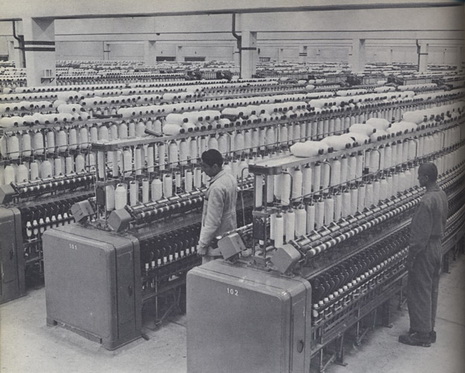
"Gulbahar Textile Plant is one of the most modern in Asia."

When I was growing up, Afghanistan did have medium and light industry, such as the textile factory pictured here. There was a sense then that Afghanistan had a bright future -- its economy was growing, its industry on par with other countries in the region. Back then, most of the cotton processed in a plant like this was grown locally. But three decades of war have destroyed industry and the supply chain.

BY MOHAMMAD QAYOUMI |


"Park Cinema, like many others, provides the needed entertainment."

This movie theater was located near where I once lived, and we could even see Hollywood movies there. (I remember seeing Spartacus, The FBI Story, and The Dirty Dozen.)

BY MOHAMMAD QAYOUMI | 


"A villager welcomes visiting nurses to his compound."

The central government of Afghanistan once oversaw various rural development programs, including one, pictured here, that sent nurses in jeeps to remote villages to inoculate residents from such diseases as cholera. Now, security concerns alone make such an effort nearly impossible. Government nurses, as well as U.N. and NGO medical workers, are regular targets for insurgent groups that merely want to create disorder and terror in society.

BY MOHAMMAD QAYOUMI  


"Most hospitals give extensive post-natal care to young mothers."

This infant ward in a Kabul hospital in the 1960s contrasts sharply with one I visited in 2004 in Mazar-e-Sharif. There I found two babies born prematurely sharing the same incubator. That hospital, like many in Afghanistan today, did not have enough equipment

"Student nurses at Maternity Hospital, Kabul."

گلبهار كاپيسا


عکس قدیمی افغانستان

شرکت نساجی گلبهار


ادامه نوشته